
Pre-Purchase Checks · Steering & Sea Trial
Check the Steering Before You Trust It: What Yacht Buyers Should Look For
A yacht can look excellent at the dock while steering problems remain unnoticed until the system is loaded underway. Wheel response, hydraulic components and rudder behaviour deserve careful attention before a purchase decision.
Introduction
A yacht can present very well at the dock. Clean decks, an orderly helm and a good cosmetic finish do not, however, confirm how the steering system behaves once the yacht is underway.
Some steering problems only become apparent when the system is loaded. Excessive play, stiff movement, leaking hydraulic components, worn linkages, loose rudder fittings or unusual vibration can point to issues ranging from routine maintenance to potentially serious defects.
The purpose of an initial buyer check is to recognise warning signs and ask the right questions. It is not a substitute for a professional pre-purchase survey or a properly conducted sea trial.
Why Yacht Steering Deserves Particular Attention
Steering is not simply another onboard system. A failure can immediately affect the ability to control the yacht, and repairs involving the rudder, steering gear or hydraulic components can become expensive.
This is why dockside appearance alone is not enough. The steering system should be considered both during the static inspection and, where included in the agreed scope, under operating conditions during a sea trial.
Steering Warning Signs to Look For
When inspecting a yacht, pay attention to how the wheel feels and to the accessible components associated with the steering system. Relevant observations include:
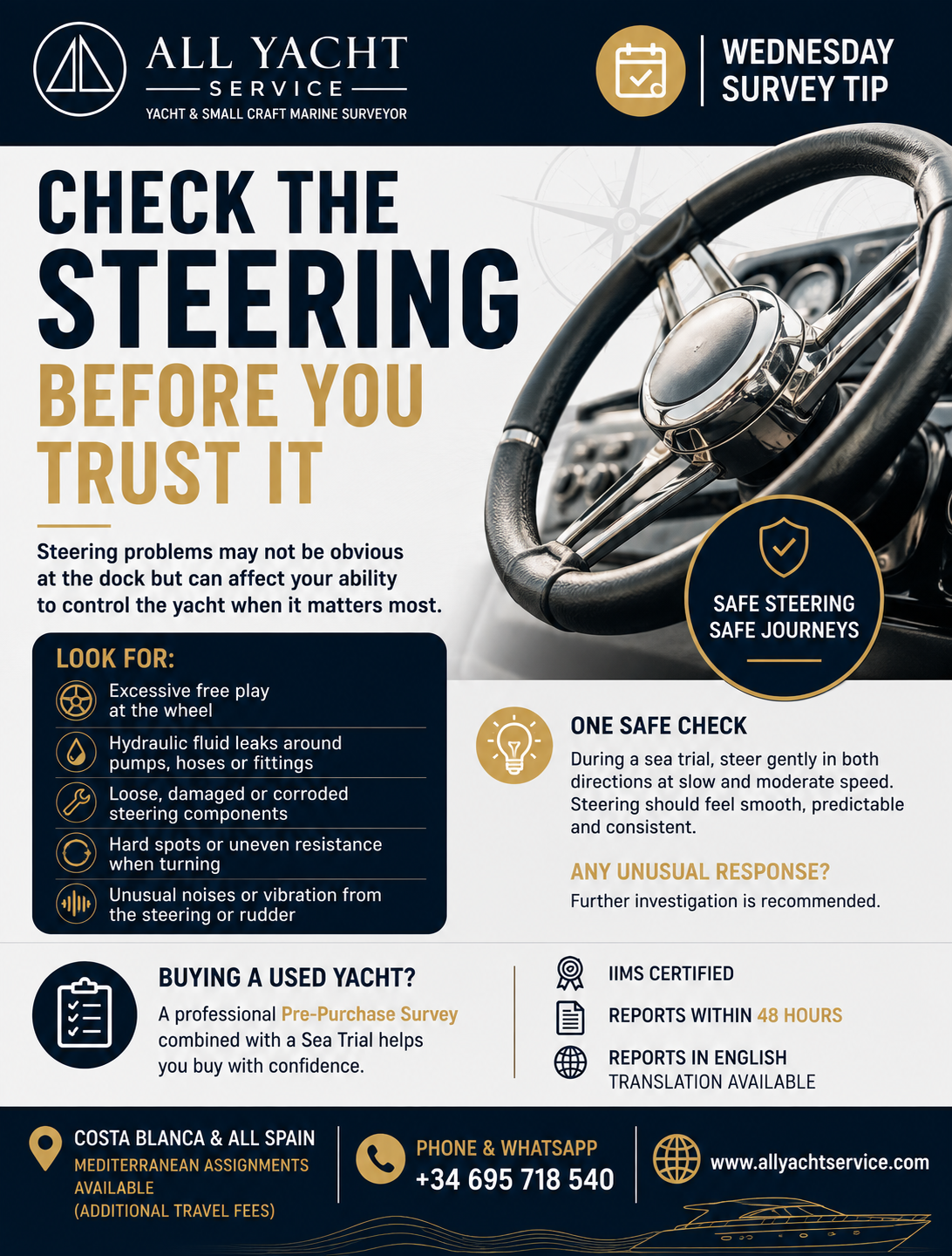
- Excessive free play at the wheel
- Hydraulic fluid leaks around pumps, hoses or fittings
- Loose, damaged or corroded steering components
- Hard spots or uneven resistance when turning
- Unusual noises or vibration from the steering or rudder
These signs do not, by themselves, establish the precise cause or repair cost. They indicate that the steering system deserves closer investigation before the buyer relies on it or reaches a final decision.
One Safe Check During a Properly Conducted Sea Trial
During a properly conducted sea trial, steer gently in both directions at slow and moderate speed. The response should feel smooth, predictable and consistent.
Any unusual resistance, delay, vibration or noise deserves further investigation. The observation should be recorded and considered together with the dockside inspection and the other sea-trial findings.
A Sea Trial Is More Than a Quick Demonstration
A sea trial should not be treated as a brief demonstration that the yacht simply starts, moves and returns to the berth.
Combined with a professional pre-purchase survey, it provides an opportunity to assess steering, propulsion and other systems under operating conditions. This wider context helps distinguish a reassuring dockside impression from evidence of how the yacht actually behaves underway.
What the Survey and Further Investigation Add
A professional survey brings the available steering observations into the wider assessment of the yacht. Accessible components, visible condition and sea-trial behaviour can be considered together rather than as isolated signs.
No single buyer check can confirm every part of a steering installation or diagnose a concealed defect. Where resistance, delay, leakage, vibration, noise or excessive play is observed, further investigation may be appropriate before the purchase is completed.
Surveyor’s Key Point
Pre-Purchase Checks · Steering & Sea Trial
More Yacht Survey Tips
Continue with related buyer guidance or browse the complete knowledge hub.
Pre-purchase support
Buying a Used Yacht?
All Yacht Service provides independent pre-purchase yacht surveys and sea trials to help buyers understand a vessel’s condition before making a final decision. Assignments are available across Costa Blanca and Spain, with Mediterranean work available subject to scope and travel fees.