
Pre-Purchase Checks · Rigging & Sails
Don’t Judge Standing Rigging by Its Shine: What Yacht Buyers Should Check
Stainless-steel standing rigging may look clean and polished while defects are developing in areas that are difficult to see. For a sailing-yacht buyer, visible condition, age and service history all deserve careful attention before purchase.
Introduction
Stainless-steel standing rigging can create a reassuring first impression. Clean shrouds, stays and polished fittings do not, however, establish the condition of components that are difficult to see or subjected to significant loads.
Corrosion, cracking, deformation or fatigue may develop around terminals, swages, toggles, chainplates and other areas even when the visible surfaces appear tidy. A standing-rigging failure can result in the loss of the mast and potentially more serious consequences.
A buyer can make a cautious visual check from deck level and ask for the rigging history. This is not a complete rig inspection and cannot identify every hidden defect, but it can reveal observations that justify closer investigation before purchase.
Why Appearance Can Be Misleading
Shrouds, stays, terminals, swages, toggles and chainplates may look clean externally while concerns are developing in less visible or highly loaded areas. A polished surface is therefore an observation about appearance, not evidence of known condition.
Visible staining or distortion can help identify where further attention is needed, but appearance alone cannot establish the cause, extent or remaining condition of a component. The yacht’s history and the accessibility of the rigging also affect what can be assessed.
Warning Signs to Look For
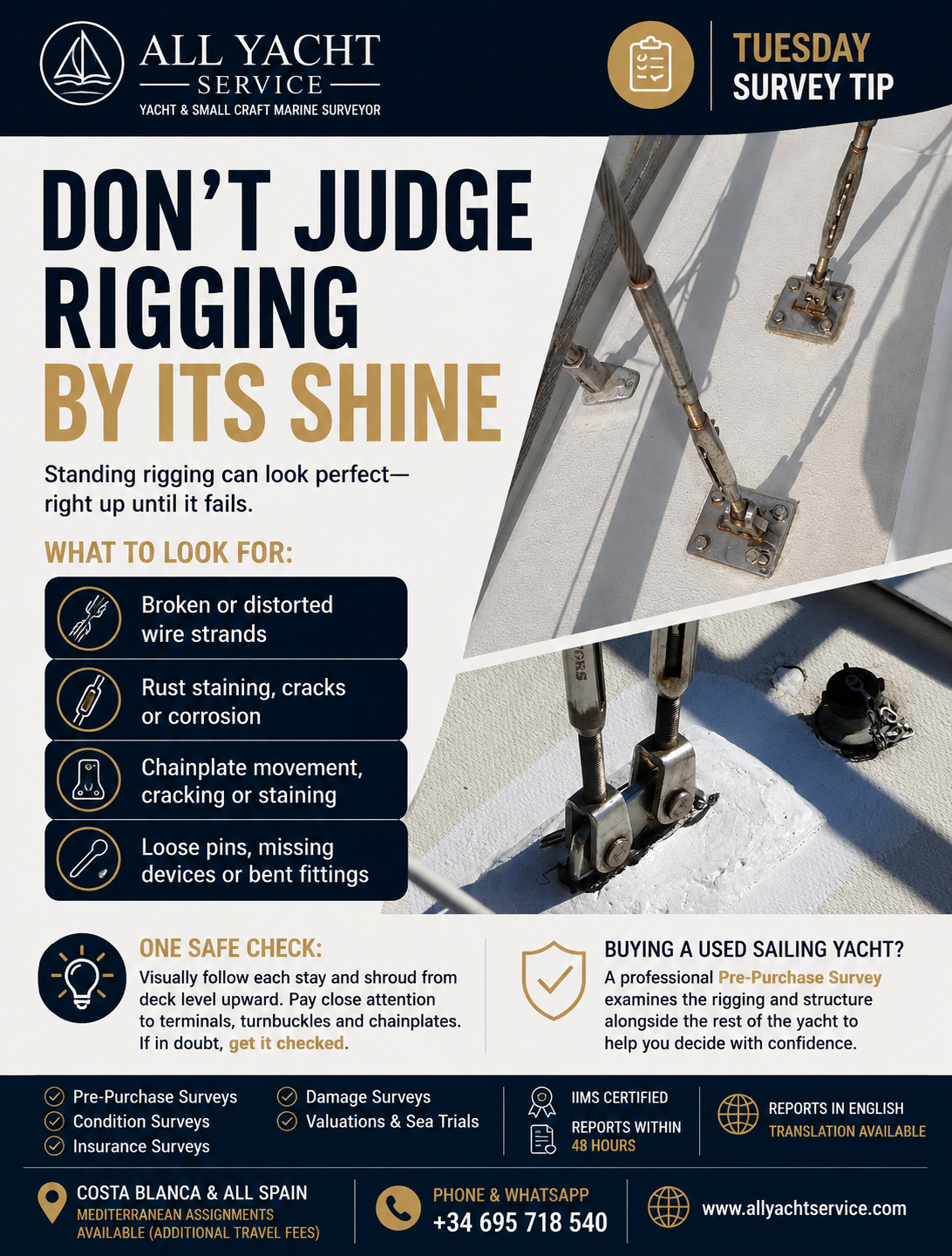
From a safe position on deck, buyers can look for visible differences or damage around accessible standing-rigging components. Relevant observations include:
- Broken or distorted wire strands
- Rust staining around terminals or fittings
- Cracks around swages, toggles or chainplates
- Bent or apparently overloaded fittings
- Loose split pins or missing securing devices
- Corrosion where stainless-steel fittings enter or disappear into the deck
- Movement, cracking or water staining around chainplates
These signs do not diagnose a defect by themselves. They should be recorded and considered in context, and they may warrant further investigation by an appropriately qualified specialist.
One Safe Visual Check
Stand on deck and visually follow each stay and shroud from deck level upward. Pay particular attention to accessible lower terminals, turnbuckles and chainplates, comparing nearby fittings for staining, distortion, damaged wire or anything that looks different.
Keep the check visual and remain within safe deck-level access. Do not attempt to dismantle loaded rigging or climb the mast without appropriate equipment and experience.
Why Rigging Age and History Matter
Even when no obvious defect is visible, the age and service history of the standing rigging remain important. Ask the seller for evidence rather than relying only on the current appearance.
- When was the standing rigging last replaced?
- Are invoices or installation records available?
- Has the yacht experienced a dismasting, grounding or significant rigging load?
- When were the mast and rigging last professionally inspected?
The answers, supporting records and any gaps in the history should be considered alongside the visible condition. No visible problem is not the same as known condition.
What a Pre-Purchase Yacht Survey Can Assess
During a pre-purchase yacht survey, accessible standing rigging, terminals, chainplates and associated structure may be assessed alongside the rest of the yacht. Visible findings, access limitations and the available history can then be considered within the wider condition assessment.
A standard pre-purchase survey is not automatically a full specialist rigging inspection or a mast-aloft inspection. Where observations, access limitations, age or history justify it, a specialist rigging inspection may be recommended before the buyer makes a final decision.
Surveyor’s Key Point
Pre-Purchase Checks · Rigging & Sails
More Yacht Survey Tips
Continue with related buyer guidance or browse the complete knowledge hub.
Pre-purchase support
Buying a Used Sailing Yacht?
An independent pre-purchase yacht survey can assess accessible rigging and associated structure within the wider condition of the yacht, identify limitations and recommend specialist investigation where appropriate.